
Navigating daily life—let alone a family vacation—with a disabled child or adult requires an entirely different level of planning. What works for a typical family rarely works for us.
Over the years, we've transitioned our focus from standard baby-proofing to creating a comprehensively safe, accessible, and accommodating environment for our family's specific needs. Finding the right tools has moved us from just surviving to actually having peace of mind.
From travel safety hacks to the books that changed how we parent, these are our tried-and-true favorites.
A Note on Safety & Liability
The products & DIY hacks shared on this page are items that genuinely work for my family’s unique situation. I am excited to share them in the hopes that they might help yours, too!
However, every child is different. I cannot guarantee that these items will work for the safety, sensory profile, or specific needs of all children.
The recommendations and DIY hacks on this page are based strictly on my personal experience as a parent, not a safety expert. Use them entirely at your own risk. I am not legally liable for any product failures, malfunctions, injuries, or losses. Please do your own research and follow manufacturer instructions to choose what is safest for your unique child.
Our Favorite Things: Safety, Books & Daily Lifesavers
When you find a product that actually works—one that buys you five minutes of peace or keeps your child genuinely safe—you want to shout it from the rooftops. Here is a curated list of the tools, books, and DIY hacks that make our days a little smoother.
Whether you are trying to secure a determined eloper or just looking for a parenting book that actually "gets" it, I’ve compiled a working list of the exact items that have helped our family thrive.
Adaptive Home Safety & Specialized Gear
"Baby-proofing" takes on a whole new meaning when you are adapting a home for a growing child or adult with special needs.
When your child is a toddler, standard safety gates and cabinet locks are usually enough. But as a neurodivergent child or a child with physical disabilities grows taller, stronger, and more capable, those standard solutions simply stop working. Creating a safe, functional, and truly cozy home requires a completely different approach to home design and safety gear.
Here is how we rethink home safety and comfort for individuals with unique needs:
1. Beyond Standard Baby-Proofing (Heavy-Duty Security)
If you have a child who is a chronic eloper (a wanderer) or who seeks intense sensory input by climbing or pulling, you need industrial-strength solutions that still feel like a home, not a hospital.
Wandering Prevention: Standard door chains are easily broken or figured out. We look at keyless deadbolts, high-mounted guardian locks, and door/window alarms that chime instantly if opened.
Reinforced Boundaries: Replacing standard baby gates with hardware-mounted, extra-tall gates or half-doors that can withstand the weight of an older child leaning or climbing on them.
Appliance & Hazard Safety: Heavy-duty stove knob covers, lockable refrigerator straps, and securing all heavy furniture (dressers, bookshelves, TVs) directly to the wall studs.
We love these to keep our cabinets and kitchen drawers locked. We keep the magnet key up high so that our little one can’t open the locks without us. Safety 1st Adhesive Magnetic Lock System, 8 Locks And 2 Keys
2. Creating "Cozy" Sensory Safe Spaces
A home shouldn't just be physically safe; it needs to feel emotionally safe and regulating for a child whose nervous system is easily overwhelmed.
The "Crash Pad" Zone: Dedicating a corner with thick foam crash pads, bean bags, or a Peapod sensory chair where a child can safely get proprioceptive input without jumping on the living room furniture.
Visual & Auditory Calm: Using blackout curtains, dimmable smart bulbs, and white noise machines to create a low-stimulation retreat when a meltdown is imminent.
Indoor Swings: If you have the space and structural support, a hardware-mounted indoor sensory swing is often the single most used item in a special needs home for self-regulation.
3. Specialized Adaptive Gear
As our kids grow, lifting and supporting them becomes physically demanding on the parents. Adaptive gear bridges the gap between safety and accessibility.
Specialized Safety Beds: Beds like the Cubby Bed or the Courtney Bed provide a fully enclosed, safe sleeping environment for children who wander at night, have seizures, or need a padded space to prevent injury.
Bath & Hygiene Supports: Standard bathtubs become dangerous slipping hazards as children get larger. Adaptive bath chairs, grab bars, and hand-held shower heads give them dignity and keep you from straining your back.
Adaptive Seating: Chairs like the Special Tomato or Rifton provide the postural support a child with low muscle tone needs to sit at the dinner table with the rest of the family.
Travel & Elopement Safety
Vacationing shouldn't mean sacrificing safety. These are the tools that let us actually relax away from home:
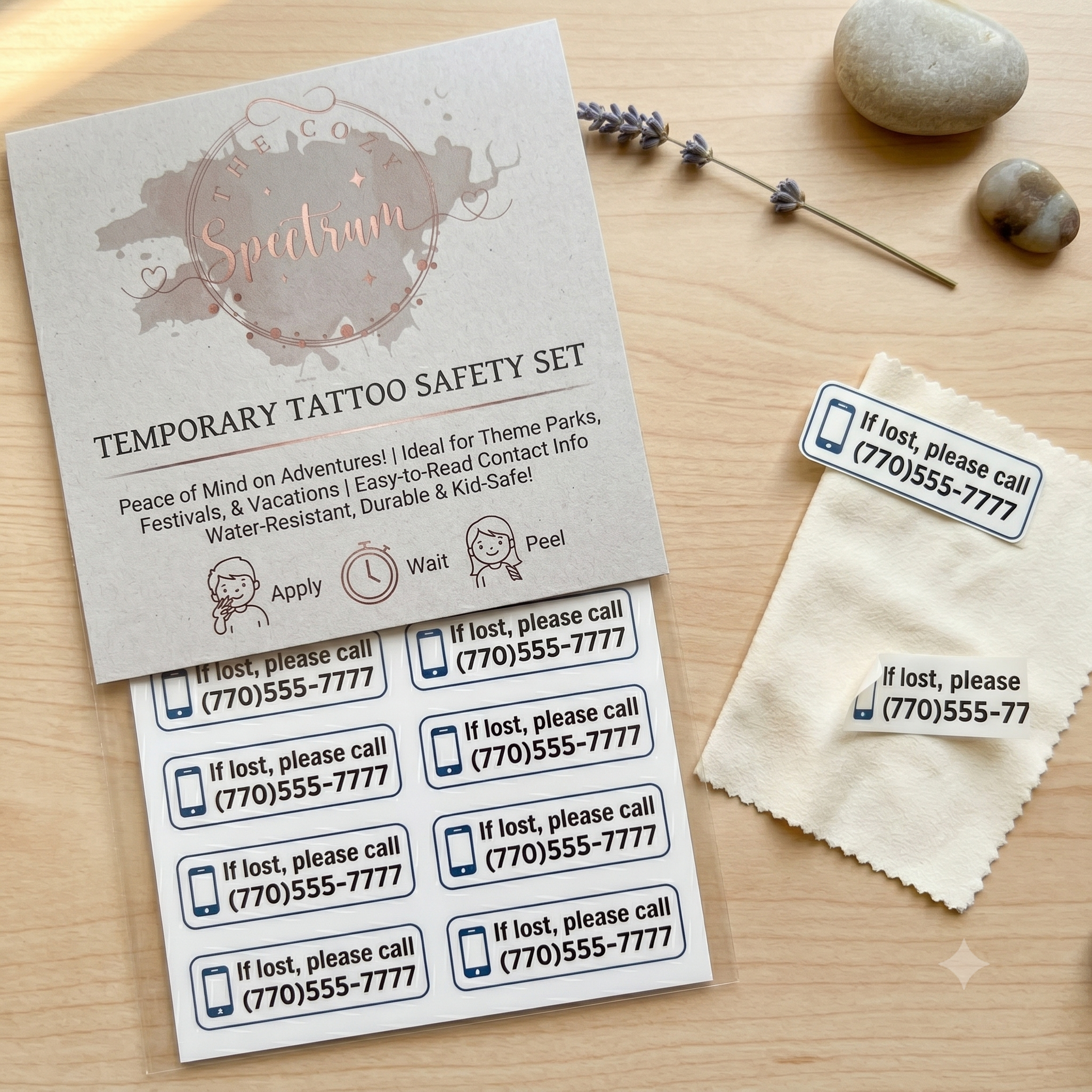
Custom Temporary Tattoos: An absolute lifesaver for crowded places like Disney World. We customize these with our phone numbers in case our nonspeaking autistic son ever gets separated from us. We also like to use them for the first day of a new Summer camp or even when we’re out at a birthday party on a weekend.
Portable Safety Gates: We never travel without heavy-duty travel gates to secure unfamiliar staircases and block off unsafe rooms in hotels or rentals.
Click here to view our favorite safety gate. Since it doesn’t require us to screw it into the wall, we can easily take it on vacation.
Portable Sliding Glass Door & Window Locks (A Must-Have for Vacations)
Vacation rentals are a fantastic option for special needs families, but they often come with a massive, hidden anxiety: sliding glass doors. And what is usually on the other side of that sliding door at a fun vacation rental? An amazing, alluring swimming pool.
Water is an absolute magnet for many children with autism and those who elope. The sheer thought of your child quietly accessing a pool while you are asleep is enough to ruin any vacation. That is exactly why we never, ever travel without these specific sliding door and window locks.
Why we love them: They are travel-friendly and temporary, meaning you don't need to drill into an Airbnb's walls to use them. They secure tightly onto the door or window track, making it physically impossible for a child to slide it open.
Layering our safety: Even though our son sleeps in his secure Travel Bed, any special needs parent knows you can never rely on just one layer of safety. Kids are little Houdinis! Knowing this lock is firmly secured on the door leading to the pool is our ultimate fail-safe.
The ultimate benefit: It gives me my sleep back. Knowing that door is locked tight is the only way I can actually close my eyes, sleep soundly, and truly relax on our family trips.
Click here to purchase our favorite Sliding Window/Door Lock.
GPS Tracking: Apple AirTags & Secure Accessories
For families with a child who is an elopement risk or tends to wander, Apple AirTags provide an incredible layer of peace of mind. We use them in a few specific ways to ensure our son is always trackable, but we are extremely careful about how we secure them.
Apple AirTag Shoe Inserts: This is our absolute favorite hack. You place the AirTag into a specially designed insert that slides completely under the shoe’s regular insole. For kids who are prone to taking off their accessories, this is perfect. Because it is completely hidden and they can't feel it, it is out of sight and out of mind, meaning our son leaves it entirely alone. Here are our favorite shoe inserts
Heavy-Duty AirTag Holders (with Wire Cables & Screws): If we need to attach an AirTag to a backpack, zipper, or jacket, we never use the cheap silicone pop-in cases. We exclusively use heavy-duty holders that secure with a wire cable and require a tiny screwdriver to lock the casing completely over the AirTag. It takes a lot of deliberate work for an adult to get it open, making it virtually impossible for our son to access the device inside.
⚠️ CRITICAL SAFETY WARNING: BUTTON BATTERIES ⚠️
Please be incredibly cautious if you choose to use Apple AirTags, as they are powered by CR2032 button batteries. While battery manufacturers sometimes coat these with a bitter-tasting film to deter swallowing, our son puts everything in his mouth and is completely unfazed by terrible tastes. That bitter coating will not stop him.
(To give you an idea of what we're dealing with: our sweet Josh is a notorious oral sensory seeker. We have watched in absolute shock as he’s happily mouthed things that would make a grown adult gag. Dirt? A delicacy. Dog toys? Five stars. We can’t even serve his food on a paper plate because he would chew on the paper after he was finished eating the actual food. We honestly started to wonder if the kid even had tastebuds! But we finally—finally!—found the one single thing on this earth that he wanted out of his mouth immediately. His absolute kryptonite? Deodorant. A bitter battery coating doesn't stand a chance with him, but a stick of deodorant? That is where he firmly draws the line!)
Button batteries can be deadly if swallowed or placed in the nose/ears. This severe risk is the exact reason we only use AirTags when they are locked inside a screw-secured holder or completely inaccessible under a shoe insert. If your child is an oral sensory seeker, does not mind bad tastes, or tends to disassemble things, please evaluate this risk carefully and ensure they can never pop the battery cover off.
The Cubby Bed: A Safe Haven and the Gift of Sleep
If your child is a nighttime wanderer, you already know the exhaustion of sleeping with one eye open. The Cubby Bed has been an absolute game-changer for our family, and honestly, it gave us our sleep back.
Here is why we consider it one of the best investments we've made for our home:
A Cozy Sensory Retreat: Josh loves this bed so much. Instead of feeling restricted, the enclosed canopy design makes it feel like his own private, safe fort. It is incredibly cozy, and it's surprisingly spacious—we can all actually fit inside the bed with him for family snuggles before bedtime!
Total Peace of Mind: The biggest benefit for us as parents is the immediate relief of knowing he is secure. We can finally sleep deeply, knowing he can't unzip it, escape, and wander the house or try to leave the house during the night.
Emergency Safety: This is something people rarely think about until they have a special needs child, but if there is ever a fire or a midnight emergency, every second counts. Because of the Cubby Bed, we never have to panic or search the house for a child who might be hiding or wandering. We know exactly where Josh is, safe and sound, every single time.
If you have an eloper or a child who struggles with sleep safety, I cannot recommend the Cubby Bed enough. It isn't just a bed; it is peace of mind for the whole family.
Wondering how to afford it? We know the Cubby Bed is a significant investment, but the incredible news is that it can often be fully or partially covered by your health insurance or Medicaid as Durable Medical Equipment (DME)! It takes a little bit of specific paperwork and advocacy, but it is absolutely possible.
👉 [Click here to visit the Cubby Bed Insurance Guide on our website] to learn exactly how to navigate the approval process, what letters your doctor needs to write, and how to get your child's bed paid for!
➡️ Or, if you're ready to explore their options right now, click here to visit the Cubby Bed website directly.
Adaptive Home Safety & Specialized Gear
"Baby-proofing" takes on a whole new meaning when you are adapting a home for a growing child or adult with special needs.
For the Parents: Understanding and Future Planning
You don't have to figure this out alone. These are the books and resources that have profoundly shifted how we understand our children's behavior and how we are preparing for their transition into adulthood:
The Explosive Child by Dr. Ross Greene
If you feel like you are constantly walking on eggshells to avoid your child's next meltdown, this book is an absolute must-read. It completely shifts how we understand and react to children who struggle with flexibility, frustration tolerance, and emotional regulation.
Why we love it: Dr. Ross Greene introduces one of the most validating phrases a special needs parent will ever hear: "Kids do well if they can." This book helps you realize that your child isn't throwing a tantrum to be manipulative, stubborn, or bad. Instead, it explains that explosive outbursts are simply a result of "lagging skills"—meaning the child literally lacks the developmental or neurological tools to handle the demand being placed on them at that moment.
A new way to parent: Traditional discipline—like sticker charts, time-outs, and taking away privileges—often makes things completely worse for kids with special needs. This book gives you a totally different approach. It teaches you the "Collaborative & Proactive Solutions" (CPS) model, which helps you step away from punishments and start working with your child to solve the underlying problems that cause the meltdowns in the first place.
If you want to move away from constant conflict and toward a deeper, more empathetic understanding of how your child's brain works, this book is essential.
Link to purchase The Explosive Child here
Poppy and the Overactive Amygdala by Holly Rae Provan
We absolutely love reading this book to our children. When you have a child who struggles with big, explosive emotions or extreme anxiety, it can be incredibly hard to explain what is happening inside their bodies without making them feel like they are "bad." This book is an incredible resource for changing that narrative.
Why we love it: It breaks down the science of the brain's "fight or flight" response in a way that is actually easy for kids to understand. By following Poppy's story, children learn that their intense feelings and impulsive reactions aren't their fault—it's just their brain's security system (the amygdala) working a little too hard to protect them from perceived danger.
The impact: It teaches kids how to recognize their emotional triggers and gives them the vocabulary to advocate for themselves. Just as importantly, it is a beautiful reminder for us as parents to pause, find our empathy, and remember that our kids' challenging behaviors are not deliberate—they are just a sign of a nervous system on overdrive.
For the Kids: Self-Discovery and Advocacy
One of the most powerful things we can do is give our kids the vocabulary to understand their own brains and bodies. These books help our children validate their experiences and learn how to advocate for themselves.
Just Ask!: Be Different, Be Brave, Be You by Sonia Sotomayor
Written by US Supreme Court Justice Sonia Sotomayor, this is an absolute staple for teaching kids about self-advocacy and neurodiversity. It covers a wide range of differences, from autism and ADHD to physical disabilities and medical conditions.
Why we love it: It frames different abilities not as deficits, but as different ways of interacting with the world. The book encourages kids to simply "just ask" when they are curious about someone's differences, which removes the stigma and secrecy around disabilities.
The impact: It teaches children with special needs that their differences are something to be proud of, while simultaneously teaching their siblings and peers how to be compassionate, inclusive, and curious instead of judgmental.
Note: I will continually update this page as we discover new tools that make life a little easier, so be sure to bookmark it!
Keep doors safely closed
✳︎
Keep cabinets safe
✳︎
Lock down sliding doors
✳︎
Secure Windows
✳︎
Keep doors safely closed ✳︎ Keep cabinets safe ✳︎ Lock down sliding doors ✳︎ Secure Windows ✳︎

"We don't adapt our homes to restrict our children; we adapt our homes to set them free."
— Special Needs Community Saying
As an Amazon Associate, The Cozy Spectrum earns from qualifying purchases. This means if you click a link and buy a product, I may receive a small commission at no extra cost to you.